
The Challenge: When Technology Becomes a Barrier in the Food and Beverage Industry
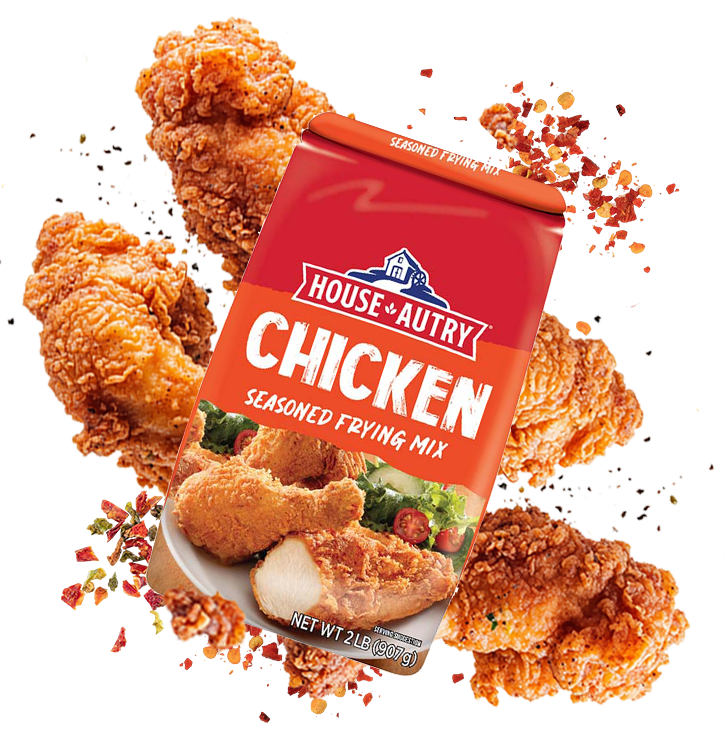
House Autry, a growing dry mix producer, with facilities in North Carolina and Georgia, found themselves trapped by their own technology. Their prior ERP system had become a significant impediment to daily operations and business growth, negatively affecting production processes.
The challenges were particularly severe in production environments. When trying to close production orders – a critical daily function – users faced confusing error messages and complex workflows. These issues increased the risk of manual errors during production processes. The system demanded precise lot tracking for ingredients, but when discrepancies arose, users were left without clear guidance. The lack of accurate information made it difficult for users to resolve issues and maintain reliable records.
Adding insult to injury, the system took 15 minutes to open each day, sometimes multiple times per day. Perhaps most frustrating was the impact on continuous improvement efforts. “With the previous system, users just stopped asking for things that improved their jobs because they were largely unachievable,” Davis noted.
The Search: Finding the Right Food Manufacturing Efficiency Solution
House Autry wasn’t actively shopping for a new ERP system – they simply knew their current solution wasn’t working. The breakthrough came when CFO Derrick Marconi contacted Acumatica about attending their annual event. Acumatica connected them with Firefly Business Group, the team behind SimplyFood Software.
What set Firefly apart was their dual expertise in technology and accounting solutions, providing the comprehensive understanding that would prove crucial during implementation.
The Implementation: A Collaborative Approach to Achieve Food Production Efficiency
The 6-month implementation from June to December 2023 took an innovative approach. Rather than relying solely on a single project lead, Firefly engaged department heads directly as “core users,” creating accountability and buy-in across the organization.
The Firefly team conducted thorough site walkthroughs at the food processing plant to understand House Autry’s unique manufacturing processes, from inventory flow to production transitions. These walkthroughs helped identify the key features required to improve production efficiency and support operational success. This hands-on approach ensured the system would be configured to their specific needs, with a particular focus on recipe management to streamline production transitions.
Batch Production and End to End Traceability: Ensuring Quality and Compliance
In the food and beverage industry, maintaining the highest standards of quality and compliance is non-negotiable. Batch production and end-to-end traceability are at the heart of this effort, enabling food manufacturers to monitor every stage of the production process—from raw material intake to the final product—while meeting stringent food safety standards and regulatory requirements.
A modern ERP system tailored for the food industry, such as Acumatica with SimplyFood, equips food and beverage manufacturers with the integrated tools needed to manage batch production, quality control, and supply chain optimization. These systems provide real-time data access and accurate measurements, empowering food processors to track ingredient usage, monitor production lines, and ensure that every batch meets both internal quality benchmarks and external regulatory standards, including the Food Safety Modernization Act (FSMA).
End-to-end traceability is especially vital for managing complex supply chains and ensuring full compliance with industry standards. With features like lot traceability, expiration date tracking, and allergen management, food and beverage manufacturers can quickly respond to market demands, manage inventory with live tracking, and maintain compliance management across multiple entities. Smart sensors and predictive analytics further enhance operational efficiency by providing real-time visibility into production and inventory status, helping to reduce waste, improve equipment efficiency, and support continuous improvement initiatives.
The Results: Quantifiable Improvements Across Operations
The implementation of Acumatica Cloud ERP with SimplyFood Software delivered transformative results across all areas of House Autry’s operations. The improvements were measurable, significant, and immediate.
A modern ERP system tailored for the food industry, such as Acumatica with SimplyFood, equips food and beverage manufacturers with the integrated tools needed to manage batch production, quality control, and supply chain optimization. These systems provide real-time data access and accurate measurements, empowering food processors to track ingredient usage, monitor production lines, and ensure that every batch meets both internal quality benchmarks and external regulatory standards, including the Food Safety Modernization Act (FSMA).
#1 Production Efficiency Gains in Production Processes
The transformation in production operations has been dramatic.
The production order import functionality alone saves 2-3 hours per day, five days per week. That’s 15 hours of productivity gained weekly. These time savings directly increase efficiency and support cost control by reducing labor hours and minimizing operational waste.
Setting up recipes, previously a cumbersome process in the prior ERP, is now “1000% faster” in SimplyFood. The recipe template feature alone saves at least 20 minutes per day, and the ability to manage multiple recipe revisions between two facilities has streamlined scheduling and improved production planning, saving several hours daily.
#2 Financial, Inventory Management, and Administrative Efficiency
The accounting team has seen substantial improvements. An ACH initiative reduced check processing from 100 checks per week down to just 20 – an 80% improvement that saves on check stock, envelopes, stamps, and most importantly, staff time that was previously spent printing and stuffing checks. Sometimes there were two people stuffing at a time.
Automated reporting has delivered measurable time savings, with finance and sales team report automation saving 5.85 weeks annually. The ability to reclass discounts upon payment entry using reason codes has reduced the need for credit memos and simplified tracking of short payments.
These improvements also support more effective logistics management by streamlining financial processes that impact inventory tracking and supply chain coordination, which are essential for improving production efficiency in food manufacturing.
#3 Data Access Revolution
Perhaps the most transformative change has been in data accessibility and visualization in the form of dashboards. Generic Inquiries (GIs) have eliminated the need for external report writers for many data analysis projects.
The Production Cost Review feature exemplifies this new data accessibility – it serves accounting for building labor and overhead standards, purchasing for viewing history and material usage, and quality for tracking lot consumption, all from a single inquiry. This also supports improved inventory management by providing clear insights into material usage and stock levels.
In addition, colorful, role-based dashboards have become a favorite for the different business units. They can see what they care about, in a visual and actionable way, refreshed automatically throughout the day. They are always looking at up-to-the-minute data. Live inventory tracking enables real-time decision-making by providing continuous visibility into stock quantities and movements.
Enhanced data access also supports more accurate demand forecasting, helping optimize supply chain management and production planning.
#4 Integration Success
Where EDI integration with the prior ERP took over two years and never went live, the same integration took only a couple of months to implement with Acumatica for their first customer through SPS Commerce.
Integration also enables improved tracking of the finished product, providing greater transparency and control throughout the supply chain. Communication with third-party logistics has been automated by pulling from existing data and sending via an automated email without them needing to do anything else, removing dependency on specific individuals and ensuring critical communications happen consistently. This automation helps overcome logistical challenges by streamlining inventory management and distribution processes.
#5 Automated Order Processing & Customer Service Efficiency
Before Acumatica, House Autry’s Customer Service Representatives (CSRs) manually reviewed and completed every incoming order — including EDI submissions — before releasing them to production and transportation. This included manually aligning ship dates with transit times and applying the correct freight charges, creating bottlenecks and continuity risks when staff were unavailable.
Now, key reference tables (Transit Time Table and Foodservice Freight Price Table) are built directly into Acumatica. Incoming orders automatically populate required fields, apply accurate freight charges, and calculate ship dates — enabling a zero-touch workflow that releases orders straight to production and shipping.
Key Results
This automation has streamlined order-to-cash processes, reduced labor demands on the customer service team, and improved overall reliability across the supply chain.
Cultural Transformation: Renewed Innovation
Beyond the quantifiable improvements, House Autry has experienced a cultural shift.
Ongoing Partnership: Responsive Support
The relationship with Firefly continues to deliver value. Davis works with the team several times per week on various projects and improvements. When asked about support response times, he provided perhaps the strongest endorsement:
Current projects include streamlining production scheduling processes to reduce dependency on specialized knowledge and make roles more accessible for cross-training and business continuity. These ongoing improvements also strengthen quality management by ensuring that standard operating procedures are maintained and quality issues are captured and addressed as part of a comprehensive system.
Looking Forward: A Scalable and Sustainable Food Manufacturing Efficiency Solution
As House Autry continues its aggressive expansion with new facilities and ambitious sales goals, the Acumatica platform provides the scalable foundation they need. Davis sees opportunities for even deeper integration, including connecting production line PLCs for real-time efficiency monitoring, which will support more efficient food production and food processing.
Enhanced integration will also enable better tracking and management of raw materials, improve allergen tracking and product traceability, and help monitor expiration dates to maintain product quality. Real-time monitoring will further ensure product quality and freshness, while supporting resource conservation through improved scalability and efficiency.
The platform’s flexibility will allow House Autry to adapt quickly to changing consumer preferences and market demands. Additionally, Acumatica ensures compliance with evolving industry regulations, positioning House Autry for sustainable growth and operational excellence.
Conclusion
For House Autry, the migration from their prior ERP system to Acumatica with SimplyFood Software wasn’t just a technology upgrade – it was a transformation that restored confidence in their systems, empowered their teams, and positioned them for continued growth and operational excellence.
House Autry’s journey from ERP frustration to operational excellence illustrates the transformative power of modern, industry-specific cloud ERP solutions. Their success serves as a roadmap for other food manufacturers seeking to modernize their operations and achieve sustainable competitive advantage.