Food Production Software Overview
In today’s fast-moving food industry, keeping production efficient while meeting strict regulatory requirements is nonnegotiable. Enterprise Resource Planning (ERP) systems are central to achieving both goals. This article outlines the core ERP capabilities built for food manufacturers — features that simplify operations, improve traceability, and reinforce safety and compliance.
You’ll get practical insight into functions like batch and recipe management, inventory controls, and real-time monitoring, plus the tangible operational benefits of adopting a specialized food ERP such as SimplyFood. Food-focused ERP solutions bundle tools that drive productivity and help meet regulatory obligations. The most impactful features include:
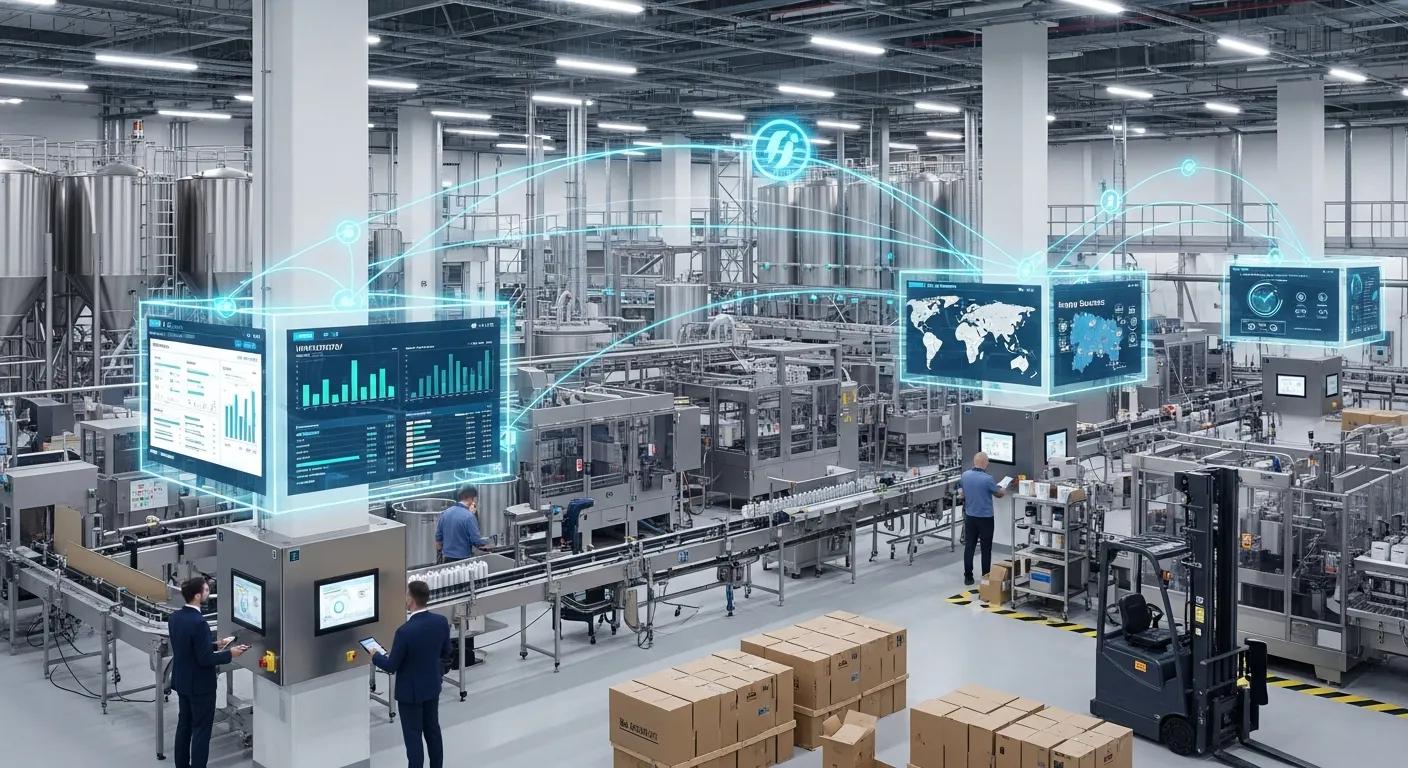
Live production metrics that support fast, informed decisions on the shop floor.
Direct links between production data and financials to reduce reconciliation errors and speed month-end close.
Built-in workflows and records to track food safety standards and regulatory requirements.
Together, these capabilities let manufacturers tighten processes, improve compliance posture, and build a more resilient operation.
Batch & recipe management
Key features for batch processing and recipe management
Batch process manufacturing and recipe management are foundational to consistent, scalable food production. The critical capabilities in this area include:
Exact formulations and versioning to guarantee consistency across every run.
Quality Control Enforcement
Integrated checks at key stages to ensure products meet specifications and regulations.
Automated Compliance Monitoring
Continuous validation of safety procedures that reduces human error and audit risk.
These tools deliver predictable product quality while cutting the chance of costly production mistakes.
How does batch processing optimize food production workflows?
Batch processing streamlines workflows by letting manufacturers run multiple products through the same equipment efficiently. The method also supports:
Streamlined Operations. Consolidated runs that minimize downtime and improve equipment utilization.
Real-Time Reporting. Immediate visibility into performance so teams can adjust quickly.
Quality Control. Ongoing checks that ensure each batch meets defined standards.
Applied correctly, batch processing increases throughput, tightens process control, and supports compliance goals.
Why is recipe and formula management critical?
Effective recipe and formula management delivers two core benefits:
Product Consistency. Uniform output across batches, reducing variability and protecting brand quality.
Efficiency in Recipe Creation. Intuitive tools and version control that make formulation changes faster and safer to implement.
Robust recipe management reduces measurement errors, shortens changeover time, and supports regulatory traceability.
Traceability & food safety
How food production software enhances traceability and compliance
Food production software strengthens traceability and compliance by capturing and linking critical data across the supply chain. Key functions include:
Real-Time Inventory Management
Track ingredients from supplier receipt through finished goods for full transparency.
Integrated Compliance Tools
Automated documentation and reporting that simplify audits and regulatory submissions.
Supplier Chain Management
Visibility into supplier performance and certifications to ensure ingredient integrity.
These capabilities help protect consumers, reduce recall risk, and prove compliance to regulators and customers.
What traceability features support regulatory requirements?
To meet regulatory expectations, food ERP systems commonly include traceability features such as:
Lot Tracking. Trace finished goods back to specific ingredient lots to speed investigations and recalls.
Expiration Date Control. Automated rotation and alerts to prevent expired product from entering the supply chain.
Implementing these features strengthens accountability and reduces liability exposure.
How does ERP facilitate quality control and compliance monitoring?
ERP systems are central to ongoing quality and compliance efforts. Key elements include:
Real-Time Tracking. Continuous monitoring of production parameters to confirm adherence to specifications.
Automated Audits. Routine checks and logged evidence that make compliance reviews faster and more reliable.
Embedding these functions in your ERP helps teams spot issues early and maintain consistent regulatory readiness.
Inventory & supply chain
Essential inventory and supply chain management features
Smart inventory and supply chain tools keep production flowing and costs in check. The essential functionalities include:
Real-Time Inventory Tracking
Continuous visibility into stock levels to prevent shortages and overstock.
Integrated Warehouse Management
Optimized storage and retrieval processes that speed fulfillment and lower handling costs.
These features help manufacturers react quickly to demand shifts and maintain service levels.
How does inventory management prevent stockouts and waste?
Strong inventory controls are key to minimizing stockouts and reducing waste:
Real-Time Stock Visibility. Accurate, up-to-date inventory data that prevents overbuying and avoids shortages.
Demand Forecasting. Historical analysis that informs purchase planning and timely replenishment.
Combined, these capabilities lower carrying costs and cut spoilage, improving margin and sustainability.
What supply chain integration improves distribution efficiency?
ERP-integrated supply chain features make food distribution more reliable and efficient by offering:
Multi-Channel Order Management. Coordinated fulfillment across sales channels to ensure on-time delivery.
Supplier Relationship Management. Better collaboration and performance tracking to stabilize procurement and lead times.
These integrations smooth the flow of goods and elevate customer satisfaction.
Scheduling & monitoring
How scheduling and real-time monitoring improve efficiency
Production scheduling and live monitoring combine to increase throughput and responsiveness:
Optimized Resource Allocation
Aligns equipment, labor, and materials to maximize output.
Immediate insights that enable faster, more confident operational decisions.
Together, they reduce bottlenecks and help operations adapt to unexpected changes.
What are the benefits of automated production scheduling?
Automated scheduling brings measurable advantages:
Reduced Lead Times. Quicker schedule adjustments that shorten the time from order to delivery.
Enhanced Flexibility. Rapid response to production changes without losing efficiency.
These benefits support higher throughput and better alignment with market demand.
How does real-time monitoring support proactive decision-making?
Real-time monitoring empowers proactive operations by delivering timely, actionable information:
Immediate Data Access. Live production metrics that surface issues as they happen.
Quick Issue Identification. Early detection of deviations to limit impact and speed corrective action.
Access to real-time insights drives continuous improvement and reduces downtime across the production line.
Frequently asked questions
Quick answers to common questions about ERP software for food manufacturing.
A food manufacturing ERP is an integrated system that manages production, recipes, inventory, accounting, and compliance in one place. Unlike generic manufacturing software, it’s purpose-built for batch and process production — handling formulations, lot traceability, and food safety requirements out of the box.
The highest-impact features are real-time reporting, integrated accounting, batch and recipe management, lot tracking and traceability, real-time inventory controls, and built-in compliance workflows. Together they tighten operations and keep you audit-ready.
It captures and links critical data across the supply chain, automates documentation and audits, and enforces quality checks at key production stages. That simplifies regulatory submissions, speeds recall investigations, and reduces liability exposure.
Batch processing lets manufacturers run multiple products through the same equipment with consolidated runs — minimizing downtime and improving equipment utilization. Paired with real-time reporting and ongoing quality checks, it raises throughput while holding each batch to defined standards.
Yes. Real-time stock visibility prevents overbuying and shortages, while demand forecasting based on historical analysis informs purchase planning and timely replenishment. The result is lower carrying costs, less spoilage, and better margins.
Turn ERP technology into measurable operational gains.
For practical ERP guidance and implementation support, explore the Acumatica-powered solutions from Firefly Business Group. We help food manufacturers translate technology into efficiency, traceability, and compliance you can prove.